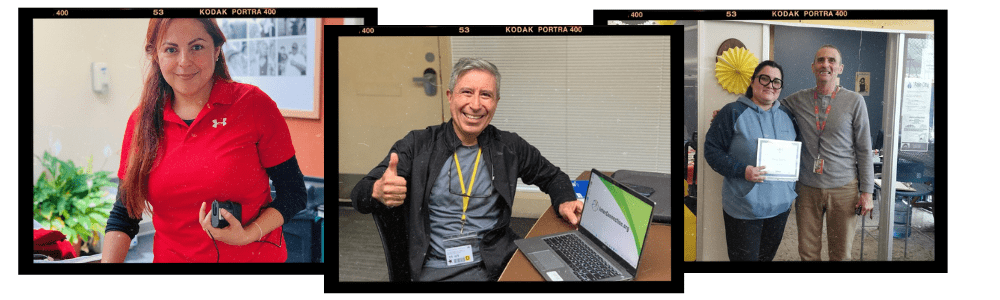
 Casa Latina computer trainees: Claudia, David, and Fanny
 Using technology is a big part of life today. But for some people, like many in Seattle’s Latino immigrant community, it can be hard to get a computer or learn how to use one. A nonprofit group called Casa Latina is working to change that. Since 1994, they have helped Latino immigrants find jobs, get an education, and be part of the community.
In 2024, the City of Seattle gave Casa Latina a $35,000 grant. This money was for more than just buying new computers. It was used to help day laborers and domestic workers learn new skills and feel more confident using technology.
Meira Jough, the city’s Digital Equity Program Coordinator, highlighted the importance of this partnership. “This project helped workers use technology for economic empowerment while keeping them safe online,” she said. Studies show that Seattle residents who speak a primary language other than English often have the greatest need for digital support.
New Skills for a Digital Age
Casa Latina has always given people tools to help them build better lives. Now, many of those tools are digital.
The grant helped Casa Latina create a special program for the Latino immigrant community. The program had a few main goals:
- Learn the Basics: Teach members how to use a computer. For many, it was their first time.
- Build Confidence: Help people feel less scared of technology so they can find jobs on their own.
- Use it in Real Life: Train members to use apps, send emails, and make documents for work.
- Be Safe Online: Show people how to protect themselves from scams and identity theft.
The classes were taught in a friendly place with support in both English and Spanish. This made it easier for people to learn.
Stories of Success
The best way to see the program’s success is through the stories of the people it helped.
Martin’s New Business
Martin, who moved to Seattle recently, took the digital classes to change his career. He learned how to use the internet to find clients who needed a pet-sitter. This helped him earn more money than he did with other labor jobs.
“Learning here at Casa Latina has helped me so much,” Martin said.
After finishing the classes, Martin got a refurbished laptop. Now he uses it to make budgets for his business and design flyers to find more customers.
Claudia’s Organized Future
Claudia is a house cleaner who wants to start her own business. She said the program gave her the skills to manage her work better. Using a computer helps her plan her schedule and find the best routes to her clients’ homes. In class, she even made her own business card, which is a step toward starting her company.
Having my own computer and learning these skills has helped me plan my days and work more efficiently,” Claudia said.
Why Learning Tech Matters
The teachers at Casa Latina were surprised by how many people in the class had never used a computer before. Many were over 50 years old. Learning simple computer and smartphone skills changed their lives. They could now find health information, look for jobs, and talk to family members who live far away.
Younger people in the class also learned a lot. They already knew some basics but learned how to use programs like Excel and Word for work. This turned their basic knowledge into skills that can help them in their careers.
Making a Difference for Everyone
Casa Latina’s project shows that helping communities learn technology is a great investment. The program didn’t just teach people to type. It gave them the tools to plan their futures, manage their money, and even start their own businesses.
As technology keeps changing, it’s important to help groups like Casa Latina. They make sure everyone, no matter their age or background, can be a part of our digital world.