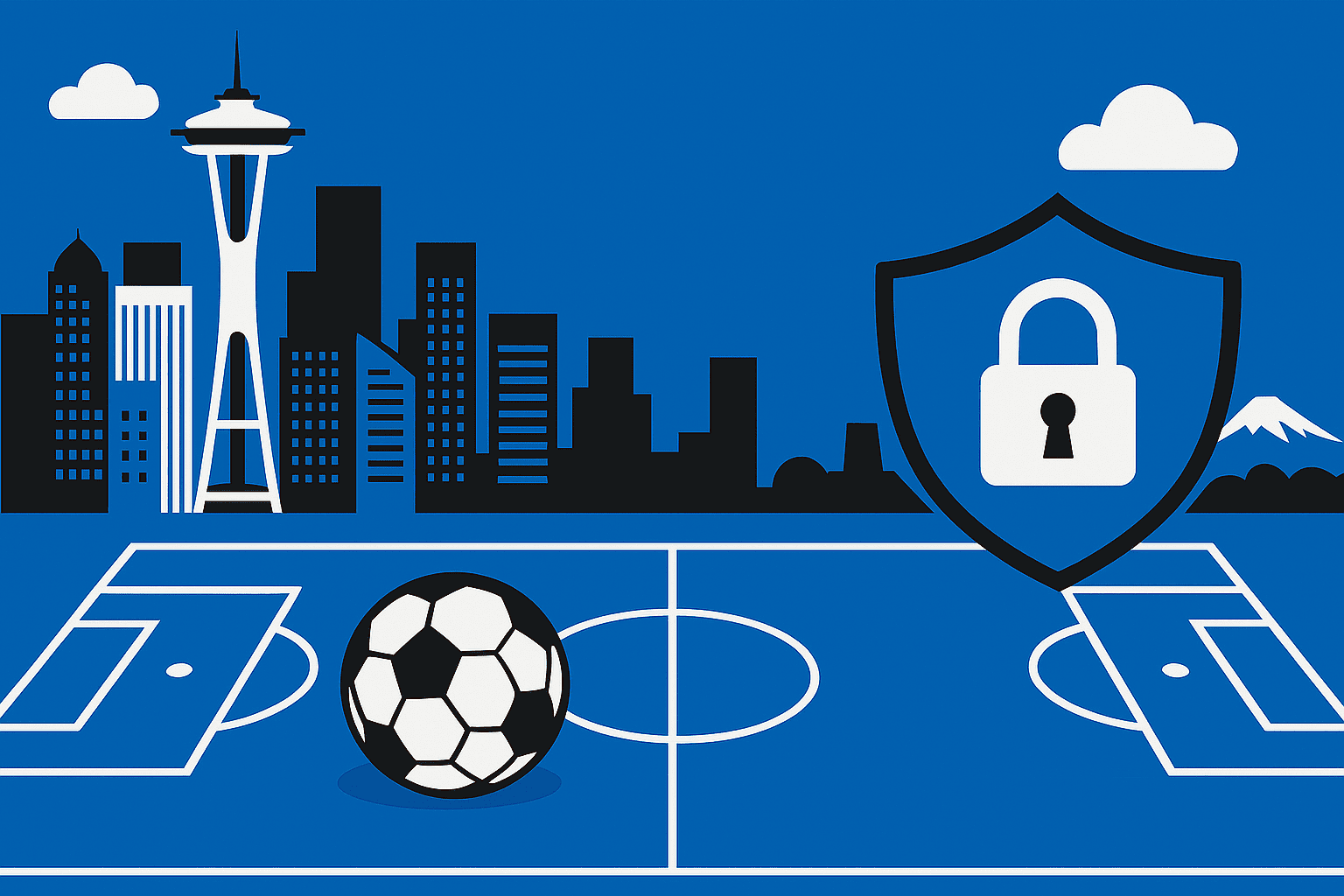
In the summer of 2026, when the world’s eyes turned to Seattle for the 2026 FIFA World Cup matches from June 11 to July 19, most attention was on the pitch. Long before the tournament’s opening match, Seattle IT had already been engaged in a different kind of contest: defending the City’s digital infrastructure against the elevated cyber risks that accompany a global event of this scale.
Major international events attract the attention of cybercriminals seeking to exploit the chaos, visibility, and pressure that accompany hosting large-scale sporting spectacles. Seattle IT understood this risk well in advance and spent over a year preparing a coordinated, multi-layered defense to keep the City’s systems, employees, and residents safe.
Think of your organization as a soccer squad under constant pressure. Cyberattacks fire off shots—while defenders process security signals to keep the ball out of the net. In this game, winning isn’t about one star player; it’s about a tight formation, quick reads, and a defense that never stops moving.
Defending Against Disruptions
On any given day, hundreds of thousands of people trust the City of Seattle with their personal information. During the FIFA World Cup matches in Seattle, that number increased dramatically; according to the Downtown Seattle Association, more than three million people visited downtown Seattle during the course of the event. They attended matches, walked through the streets to attend related events, paid for parking, and filled Seattle’s massive Waterfront Park.
Meanwhile, the residents in the City continued to go about their lives, trusting the City to continue providing its services as normal. Garbage was picked up, community centers held their activities, and lights were turned on. Anything that would interrupt this normal course of life would have been an embarrassment. The disruption caused by a major cyberattack could have eroded the trust of our residents and our visitors. Seattle couldn’t afford to drop its guard during this major world event.
Coordination Across Every Level of Government
Let’s flash back to 2024. As soon as it became clear Seattle would host World Cup matches, Seattle IT began work to shore up the City’s technical defenses. This meant upgrading aging infrastructure, verifying both physical and virtual access controls across City systems, and stabilizing the City’s broader technical environment to reduce vulnerabilities. These efforts ensured that critical systems could withstand the increased scrutiny and traffic that comes with a global event.
Protecting first responders and emergency teams was a top priority throughout the process. Seattle IT updated the technology relied on by police, fire, and other emergency management personnel, ensuring these teams had secure, dependable tools to respond quickly if an incident arose during the tournament.
Seattle IT also partnered closely with Seattle Public Utilities, Seattle City Light, and the Seattle Department of Transportation (SDOT) to protect the infrastructure residents depend on every day. Coordinating cybersecurity efforts among these critical infrastructure providers made certain that power, water, and transportation systems remained resilient throughout the event.
Cybersecurity threats rarely respect jurisdictional boundaries, and Seattle IT recognized that a Citywide defense required a regional and national approach. Staff worked hand-in-hand with neighboring jurisdictions and partners across federal, state, county, and local government to share intelligence, align response protocols, and coordinate in real time. This collaboration extended situational awareness far beyond Seattle’s borders, creating a broader shield around the entire region during the tournament.
Preparing People, Not Just Systems
Technology alone cannot stop every threat. Recognizing this, Seattle IT also focused on equipping City employees, both technical staff and non-technical staff, with the knowledge to recognize and respond to potential cyber threats. Phishing attempts, social engineering, and suspicious activity often succeed because of human error, so building awareness across departments added another critical layer of defense. Throughout the year leading up to the FIFA World Cup matches in Seattle, Seattle IT published internal news for City employees on how to be cyber-safe.
The result of this extensive planning was that no major cyber incidents occurred during the 2026 FIFA World Cup matches held in Seattle. This outcome reflects the strength of the preparation, coordination, and vigilance that went into the effort.
What Seattle IT Learned for Next Time
Now that the FIFA World Cup has come and gone, Seattle IT has conducted an internal retrospective to evaluate the preparation and performance that made the event a cybersecurity success. Several themes emerged as clear strengths:
- Cross-department collaboration was strong throughout the planning and execution phases, with teams working fluidly across technical and operational boundaries.
- Proactive planning allowed potential issues to be addressed before they became problems, rather than reacting under pressure.
- Responsive leadership ensured that decisions could be made quickly when time-sensitive issues arose.
Looking ahead, Seattle IT has identified several opportunities to strengthen preparation for future major events. These include developing a formal major event checklist and pre-event checklists to standardize preparation across departments, establishing anonymous suggestion mechanisms so staff can surface concerns candidly, and producing executive summaries of cybersecurity findings to keep City leadership informed with clear, actionable insights.
A Model for Future Events
The 2026 FIFA World Cup put Seattle’s digital infrastructure to the test on a global stage, and Seattle IT’s preparation held strong. By strengthening technical defenses, coordinating across every level of government, protecting critical infrastructure partners, and preparing City employees to recognize threats, Seattle IT helped ensure the matches in Seattle ran without a major cybersecurity incident for the City.
The lessons learned from this effort will help sharpen the City’s readiness for whatever comes our way.

Tara Zaremba is a seasoned leader with over 15 years of service at the City of Seattle, bringing deep experience across municipal operations and private‑sector IT in financial services, high technology, and protein vertical harvesting. She is committed to advancing the City’s mission by improving resident outcomes, strengthening equitable access to services, and ensuring transparent, accountable government.